
Fortress Product Expert
Answered by product specialists with product information and store enquires.

Answered by product specialists with product information and store enquires.

Enquire order status, delivery & installation, post-sales services or member account
Still have other inquiries?
See what others are asking


2026 Popular Projector Shopping Guide & Recommendation
When choosing a projector, the first thing you need to consider is its resolution, then the aspect ratio, brightness, contrast and projection technology. You also need to have an idea of where you want to put it. Below is an overview of different types of projectors to help you find the best one for you!
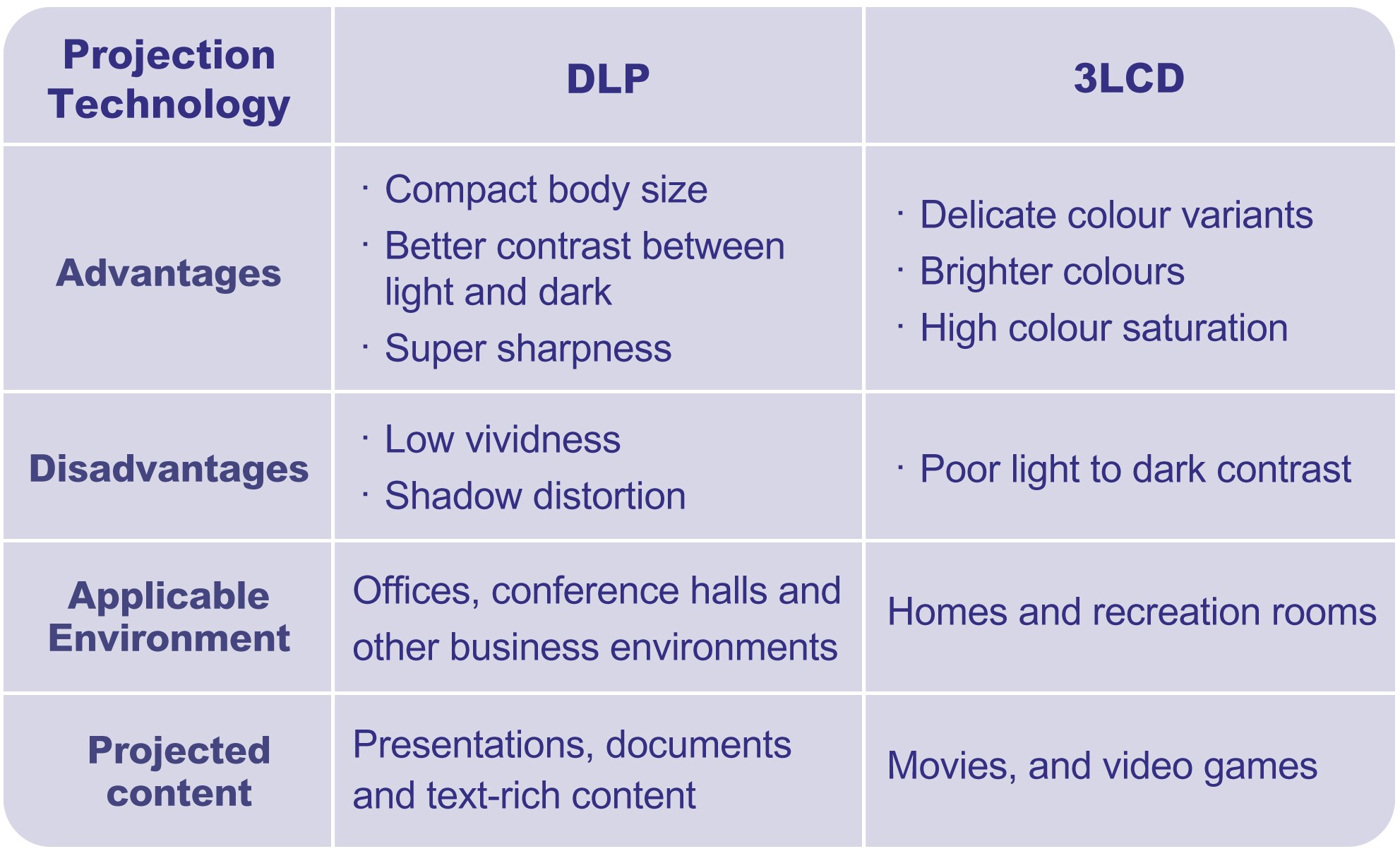
Projectors are generally divided into two major types: DLP and 3LCD. Before you buy, check out the technical advantages and features of each type.
The higher the resolution, the better the result. The projected image is more detailed with superior image quality. However, you also need to note the aspect ratio. Standard ratios are 4:3, 16:9 and 16:10. The former is used for slides and computer files while the latter two are commonly used for Blu-ray movies.
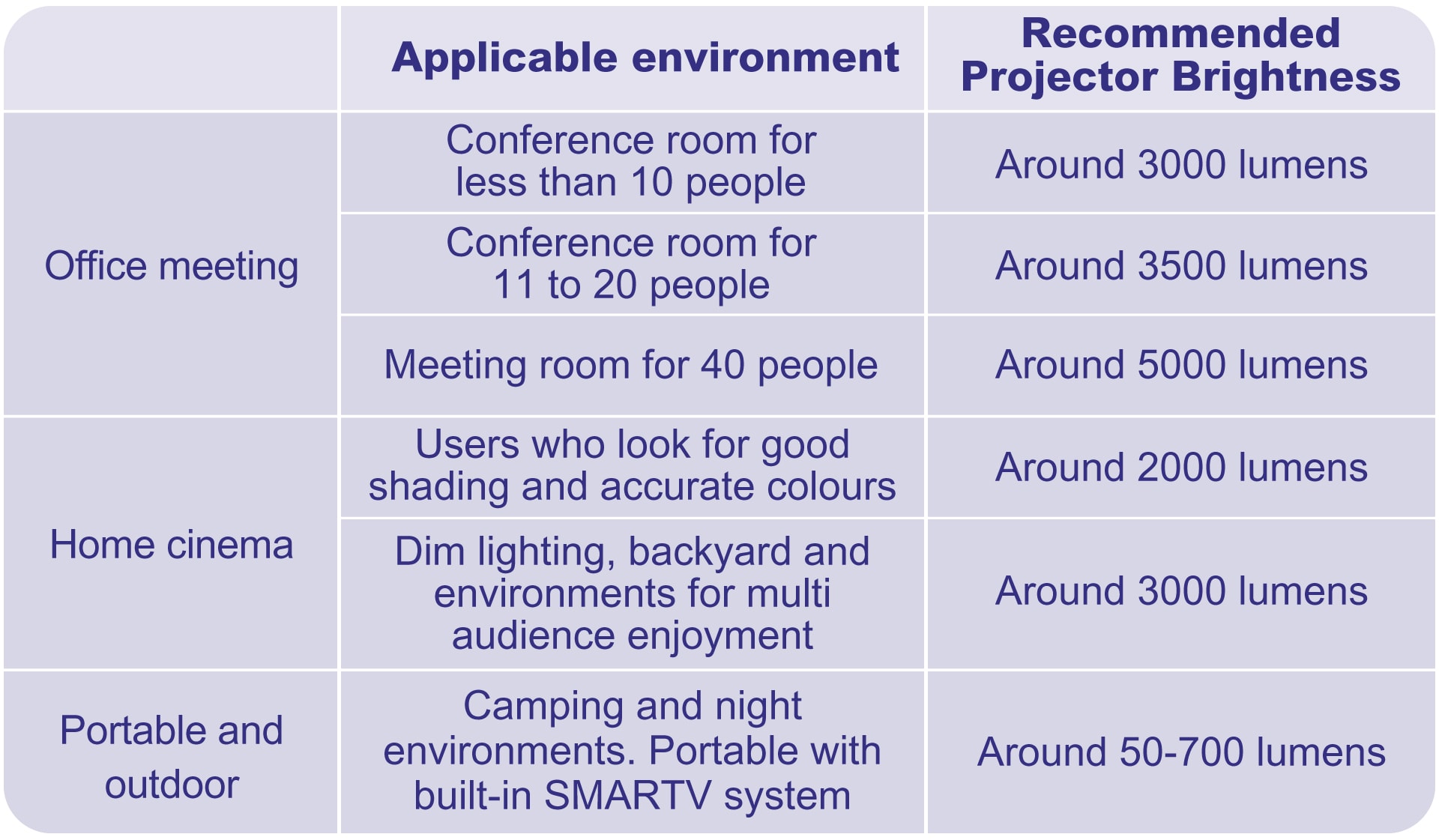
Brightness is also known as luminosity. The brighter the projector, the higher the luminosity projected. If the throw distance is long and the projection screen is large, you need a model with higher luminosity. So before you buy, find out where you will place your projector and the size of the projected image.
Contrast refers to the photometric difference between the darkest static and the whitest static picture. If the contrast is high, the colour will be more vivid and the displayed image will be sharper. This type of projector is more suitable for home entertainment.
Generally, the throw distance of a home projector is short so you should choose a model with a short focus. On the other hand, if the projector is used in a conference room, choose a model with zoom and high brightness. Otherwise the screen will be either too large or too small and the projected image will be blurred.
The brightness of the projector lamp will decrease with time, causing a decrease in detail of the projected image. It is important to replace the projector lamp regularly. At present, projector lamps on the market last for around 2000 to 5000 hours. Using a 2-hour movie showing as an example, you can enjoy 1,000 to 2,500 projections.
Projectors are designed to meet different user needs. Some come with auto zoom technology so you can adjust the most suitable focal length quickly for clearer images.
Standard portable projectors come with built-in speakers. Set up your own mobile cinema anytime and anywhere. Some models support Dolby Audio and stereo channels so users can enjoy high-quality audio experience without connecting speakers via Bluetooth.
Nowadays, a projector not only shows images, but also offers a one-stop entertainment experience. Many projectors are equipped with SMARTV and Android systems, allowing users to download different applications from Playstore, such as YouTube, Netflix, etc. Some models even support voice operation and mobile phone remote control for a total user experience.
A: Not necessarily. Projectors used at home do not require high brightness because it is easy to control light and darkness at home. The effects of external brightness are also low so there is no need to choose a high brightness projector.
A: We generally recommend a DLP projector for content-rich documents. This type of projector offers high sharpness so even small text can be projected clearly. Meanwhile 3LCD models are ideal for use at home as colours are brighter and more suitable for playing movies.
A: Nowadays manufacturers have launched portable projectors that offer excellent imaging quality and resolution. This type is great for carrying around or for camping. Both portable projectors with DLP and 3LCD are now available. Check also if the projector you want to buy is equipped with an Android system or an external USB for more convenient playback.