
Fortress Product Expert
Answered by product specialists with product information and store enquires.

Answered by product specialists with product information and store enquires.

Enquire order status, delivery & installation, post-sales services or member account
Still have other inquiries?
See what others are asking


2026 Popular Oximeter Shopping Guide & Recommendation
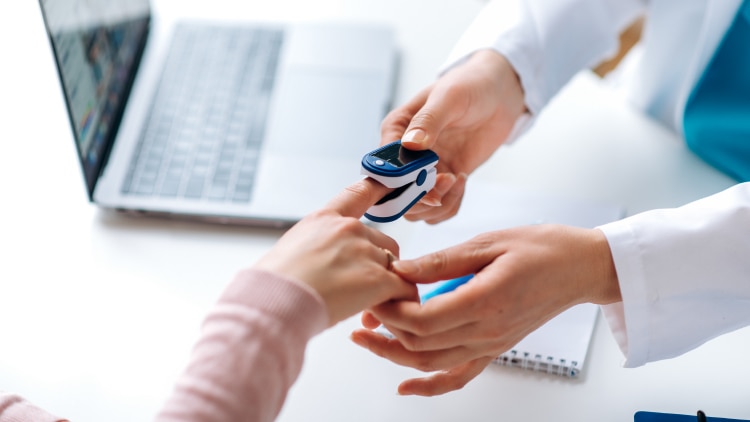
Monitoring blood oxygen levels can help you spot warning signs of potential diseases for timely treatment. An oximeter can help protect your health and that of your family’s by paying attention to blood oxygen levels and pulse rates. Here is a guide to helping you choose an oximeter from Beurer, HealForce as well as smart sports watches with oximetry functions from Apple, Garmin, Mi .
The principle behind an oximeter
An oximeter is a non-invasive medical device. The ratio of oxygenated haemoglobin is calculated by emitting infrared and red lights alternatively from a finger clip probe to detect the absorbance of different wavelengths of light. The device quickly measures oxygen saturation, pulse rate and other body data for real-time assessment of health status.
What is blood oxygen saturation?
Oxygen saturation refers to the ratio of oxygenated haemoglobin to total haemoglobin in the blood. It is an important physiological indicator of our respiratory cycle. The ideal blood oxygen level of a normal healthy person is around 99%-100%, while for obese and less healthy people, it falls to 97%-98%, depending on the individual's body type and environment.
Low oxygen saturation can lead to shortness of breath and fatigue, while very low oxygen saturation can impair organ function. It has been reported that some patients with covid in overseas countries suffer from silent hypoxia. Although there are no obvious symptoms at the initial stage of diagnosis, their body organs are damaged to varying degrees. Oxygen saturation values are closely related to health and can directly reflect health warnings. For the chronically ill and the elderly, the use of an oximeter to measure oxygen saturation can help detect changes in health conditions for early medical attention.
*The above information is for reference only. Please follow your doctor’s advice.
Oximeter shopping guide
1. Select type
There are three types - finger, handheld and wrist. All three use a finger clip probe to measure oxygen levels.
Type |
Features |
|---|---|
Finger oximeter |
|
Handheld oximeter |
|
Wrist oximeter |
|
2. AUTO SMART DETECTION
Get an oximeter with smart detection function for more convenience. Some are equipped with an auto probe that can be clipped directly onto the finger to check blood oxygen levels. Elderly people who are not familiar with the use of electronic devices can learn how to use this device easily.
3. ABNORMALITIES ALARM FUNCTION
Monitoring body data is all about detecting warning signs in advance, so an oximeter with an alarm function is vital. Some oximeters are equipped with a range of alarms set to an individual's condition. If an abnormal value occurs, the oximeter sounds an alarm to remind the user to monitor again or to seek immediate medical attention.
4. HIGH RESISTANCE TO INTERFERENCE
Are the results of non-invasive oximeters accurate? Those who are concerned are advised to choose a model that is highly resistant to interference from ambient light sources and electromagnetic fields for accurate results. This prevents data errors that could lead to serious health concerns.
5. LARGE AND CLEAR DISPLAY
The most common finger oximeter is lightweight but has a relatively small screen. Since many users are elderly, a larger and clear display will help them better monitor their health. Some oximeters have automatic sensors that allow you to switch the screen to any direction so the results can be viewed from different angles.
6. SMART SPORTS WATCHES
Many smart sports watches now include blood oxygen, pulse rate and other body data monitoring functions. As they can be worn any time and used in conjunction with a smartphone app, smart sports watches are suitable for long-term health tracking. It is important to note that smart sports watches are not medical devices and are more suitable for people who are in good physical condition and who exercise regularly to help monitor their health.
Notes on using an oximeter
1. If your finger is cold and unable to display the value, rub the end of your finger to promote blood circulation and take the measurements again.
2. If your finger is wet and the value cannot be displayed, dry your finger and monitor again.
3. If your finger is covered with nail varnish or has an artificial nail, remove it before taking the measurement.
4. If you are unable to get any measurements repeatedly, try another finger but avoid using the thumb.
5. Avoid shaking your hand and keep it stationary for measurement.