
Fortress Product Expert
Answered by product specialists with product information and store enquires.

Answered by product specialists with product information and store enquires.

Enquire order status, delivery & installation, post-sales services or member account
Still have other inquiries?
See what others are asking

2026 Popular Fridge Shopping Guide & Recommendation
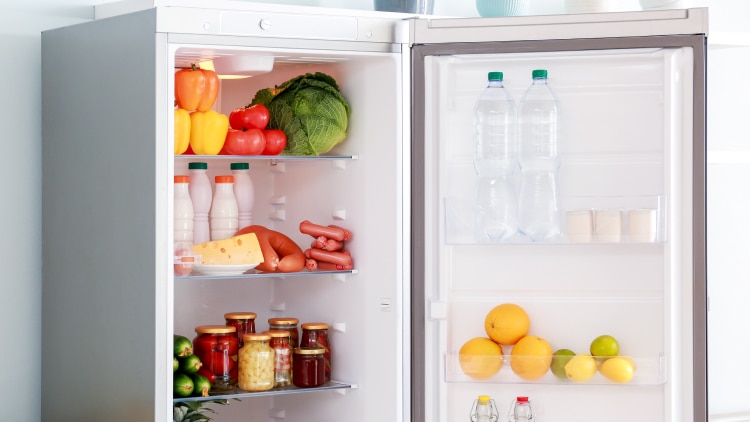
Is your fridge at home not cold enough? Does it provide enough space to store all your shopping items? Does it consume too much power, so your electricity bill is high? Or is it simply getting old? If your fridge has any of theses issues, it’s probably time to get a new one. Although refrigerators are all pretty similar, but which one is the best? Let's look at some tips to help you find the right one for your needs.
The first thing you need to consider is how much space you have at home. You also need to reserve 5cm at the top and 5mm on both sides of the fridge to ensure enough ventilation and for heat to disperse easily.
When choosing the size (capacity) of a refrigerator, you need to consider the size of your family and your habits. If you have a big family and you need to store lots of food, you should obviously consider a large fridge. But if there are only one or two of you in your family, a small fridge will probably be sufficient. Use the formula below to help you calculate the ideal size: Number of Family Members x 70L + 170L (100L of daily food and 70L stand by food).
Based on this formula, a family of two will require at least a 310L refrigerator, while a family of five will need at least a 520L refrigerator. Note that this is just a rough estimate and is for reference only.
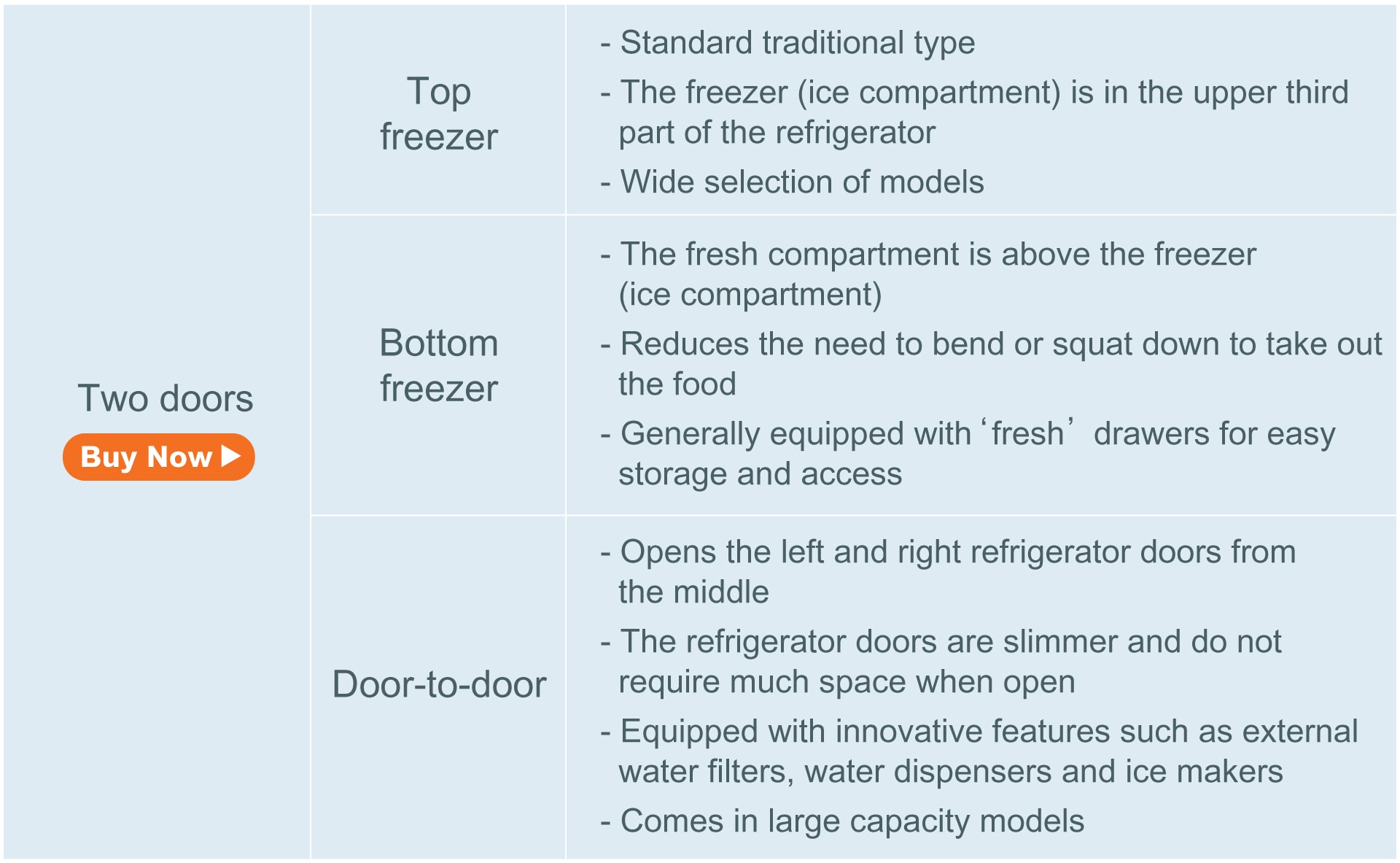
Refrigerators are generally classified into one door, two-door and multi-door types. The most common two-door refrigerator is further divided into three subtypes: top freezer, bottom freezer and door-to-door.


Refrigerator motors are divided into inverter and non-inverter types. Inverter refrigerators generally use up to 20% less power than standard refrigerators as they adjust the power they use according to load and temperature differences. This also reduces wear and extends equipment life. However, the invertor types generally cost more.
In general, the optimum temperature of a standard two compartment refrigerator is about 4°C on average in the fresh compartment and about -18°C on average in the freezer compartment. To avoid the problem of too high or too low temperature difference, the refrigerator comes with a manual temperature control. Some refrigerators are equipped with built-in computerised temperature controls for users to pre-set temperature.
A refrigerator accounts for around 14% of total household electricity consumption. Buying an energy-saving refrigerator is both environmentally friendly and helps to reduce your electricity bills. Before you buy, look for the Energy Efficiency Grading Label on the fridge. This will show one of five levels. Level 1 (green) is the most energy efficient. Also pay attention to the Annual Energy Consumption Label to compare the energy efficiency of different models.
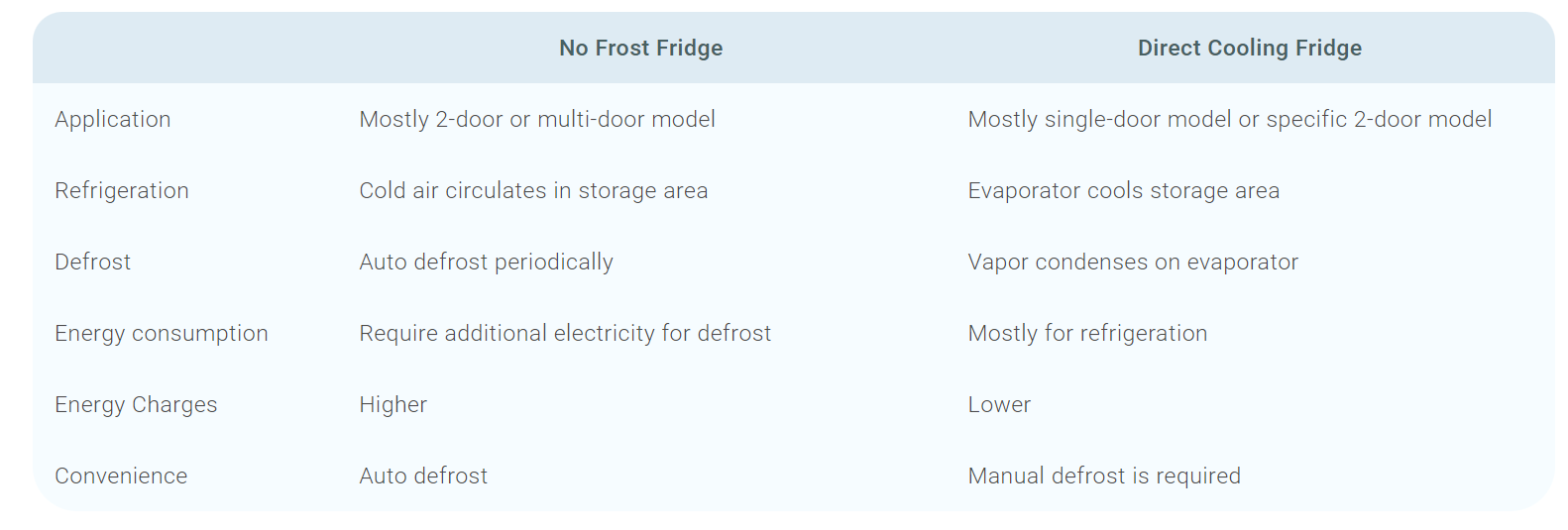
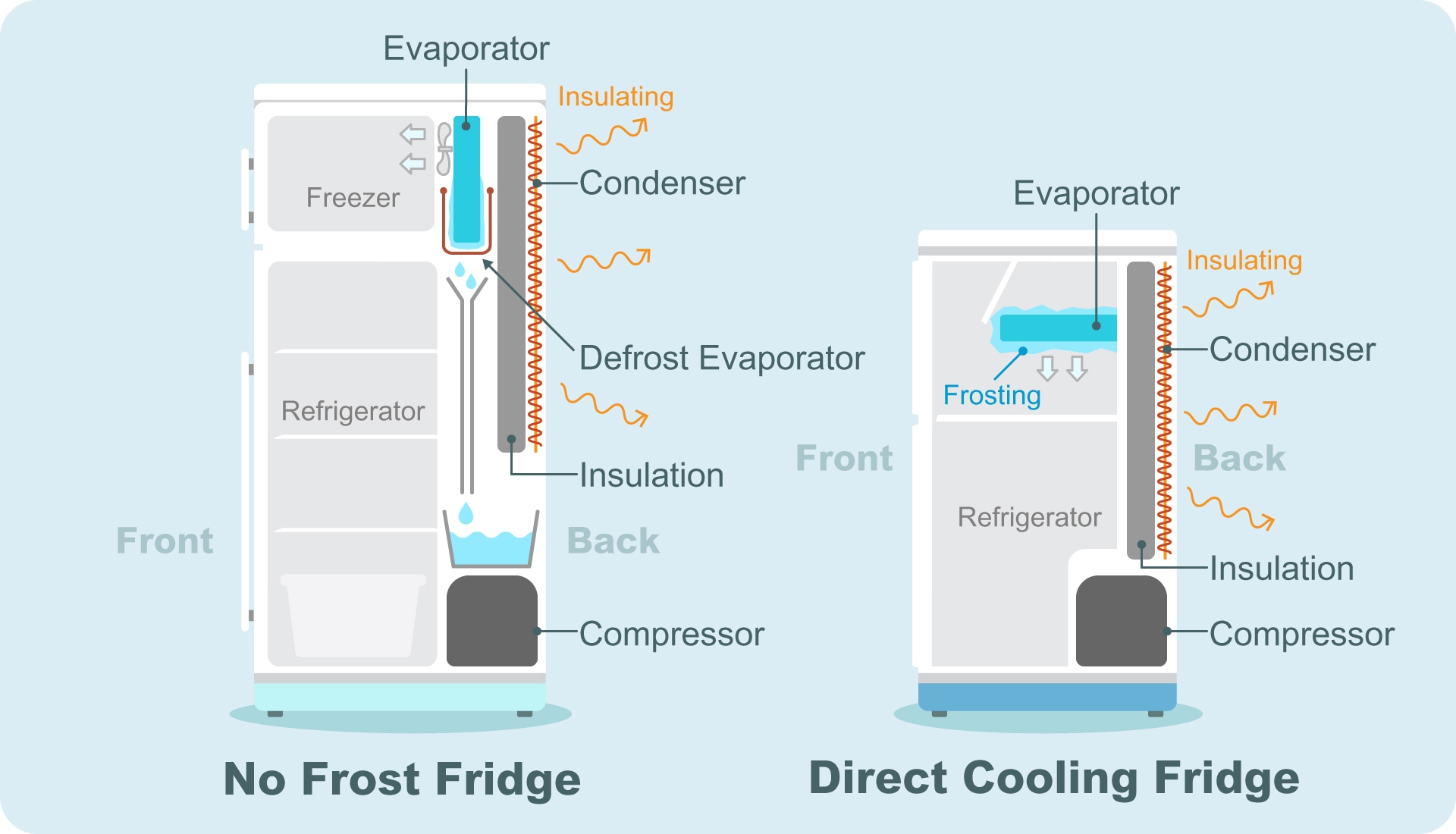
There are different fridge with various model and features on the market. Users could choose according to their personal perference and needs. Common one would be no frost fridge and direct cooling fridge
Some brands may offer special features for their refrigerators. For example, LG InstaView Door-in-Door™ Refrigerator (422L) has glass mirror technology that enables users to simply tap the mirror twice to make it transparent, so that you can see the food inside without having to open the door. This reduces the loss of cold when the door Is open to help keep your food fresher.

A refrigerator should be cleaned at least once every three months. More stains will appear with more frequent use. Regular cleaning is required as stains in the refrigerator can harbour bacteria.
Remove inside shelves. Use a kitchen paper soaked in warm water and apply to any stains or use a 1:1 vinegar to water mix to clean shelves. Alternatively, add a little water to some baking powder and salt to turn it into a paste. Dip a cleaning sponge into the paste to remove stains. Salt has the dual function of acting as a scrubbing agent and a steriliser.
Use a 1:1 vinegar to water mix and saturate the interior with a spray can. Close the refrigerator door and wait for 15 minutes. Finally wipe with a damp cloth and use an old toothbrush to complete cleaning.
Add 2 tablespoons of baking powder into 1L of warm water and wipe all over.
Wipe with 1L of warm water with 2 tablespoons of baking powder added to remove mould. Dry thoroughly before returning the drip tray to its original place.
Use a vacuum cleaner or a soft-bristled toothbrush to clean the ventilation grille. Never use a damp cloth to avoid rust.
In addition to choosing a refrigerator with an inverter motor and Level 1 Energy Efficiency Grading Label, the following energy saving tips are also useful: