


Wheelchair Buying Guide for the Elderly | Manual vs Electric Wheelchairs: Mobility, Home Space and Travel Needs
As age and mobility needs change, some elderly people may benefit from suitable mobility support for longer walks or outings. The right wheelchair can support medical appointments, shopping, family visits, dining out and community activities, helping elderly people take part in daily life more comfortably while making travel arrangements easier for family members and caregivers.
When choosing between a manual wheelchair and an electric wheelchair, which option better suits everyday needs? This guide explains practical wheelchair selection factors based on operation, caregiver support, travel in Hong Kong and home space.
Manual vs Electric Wheelchairs: Key Differences
Manual wheelchairs are propelled by the user or pushed by a caregiver and are generally lighter. Electric wheelchairs are powered by a battery and motor, and may suit users who can operate the controls safely and need to travel more frequently or over longer distances.
Swipe left or right to compare manual and electric wheelchairs
| Comparison Item | Manual Wheelchair | Electric Wheelchair |
|---|---|---|
| Drive Method | Self-propelled by the user or pushed by a caregiver | Powered by a battery and motor and operated with a controller |
| Common Types | Large-wheel self-propelled, small-wheel attendant-propelled, lightweight folding and functional wheelchairs | Lightweight, folding, caregiver-control and functional electric wheelchairs |
| Weight | Usually lighter and easier to carry | Usually heavier; check the total weight including the battery |
| Transport | Generally easier to fold and place in a vehicle | Compare folding method, battery removal and lifting weight |
| Charging | No charging required | Requires regular charging and battery-level management |
| Maintenance | Relatively simple construction | Includes battery, motor, controller and electronic components |
| Typical Cost | Entry-level prices are generally lower | Purchase and ongoing maintenance costs are generally higher |
| Key Consideration | Whether the user or caregiver can push it safely and continuously | Whether the user can operate it safely and manage charging |
Choose a Wheelchair by Operation and Caregiver Support
After understanding the key differences, first decide who will operate the wheelchair. In general, an elderly person who can self-propel may consider a large-wheel manual wheelchair; caregiver-assisted use may suit a small-wheel or lightweight folding wheelchair; safe independent control and longer journeys may suit an electric wheelchair; special postural or transfer needs should be professionally assessed.
Which type best matches the need?
Choose the option closest to the usual situation to view a recommended wheelchair type and key points.
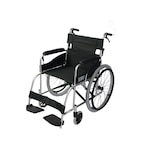
Elderly User Self-Propels: Large-Wheel Manual Wheelchair
For an elderly person with suitable upper-body strength and control who wants to steer independently, consider a self-propelled wheelchair with large rear wheels and hand rims. Confirm that the user can propel continuously, turn smoothly and brake safely. Large-wheel models generally need more turning space.
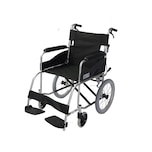
Caregiver Pushes: Small-Wheel or Lightweight Folding Wheelchair
If the wheelchair is mainly used for medical appointments, short shopping trips or daily transport with family or caregiver assistance, consider:
- Small-Wheel Attendant-Propelled WheelchairUsually manoeuvrable and designed for caregiver pushing.
- Lightweight Folding WheelchairConvenient for frequent vehicle transfers and carrying.
- Caregiver WheelchairMay include caregiver hand brakes for better control and stopping.
- Transfer WheelchairFlip-up or removable armrests and footrests can make transfers easier.
Consider the elderly user's posture and comfort as well as the main caregiver's strength and operating needs.
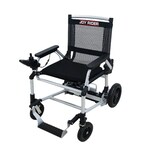
Elderly User Operates Independently: Lightweight or Folding Electric Wheelchair
For an elderly person with limited upper-body strength who needs to go out more frequently or travel farther and wants more independence, consider a lightweight or folding electric wheelchair. The user should understand the controls, manage direction and speed steadily, and watch for pedestrians, obstacles and surface changes. If hand dexterity is limited, check whether the controller position is adjustable and whether caregiver control is available.
Special Postural or Transfer Support: Functional Wheelchair
An elderly person who cannot maintain a stable sitting posture, leans to one side or slides down may need a functional wheelchair or specialised seating accessories. If head, neck or trunk support is also required, or transfers are difficult for the caregiver, seek a professional wheelchair assessment before choosing a backrest, headrest, cushion, footrest or reclining function.
Images are for wheelchair-type illustration only. Refer to the latest product page for current models and specifications.
Compare Wheelchair Functions by Hong Kong Travel Scenario
After selecting a suitable wheelchair type, filter the required features by usual travel distance, surfaces and transport. Short medical trips and longer periods around estates, shopping centres or the community place different demands on weight, control and battery range.
Medical Appointments and Short Trips
Lightweight, easy to fold and convenient to carry
Dining, Shopping and Family Visits
Seat support, manoeuvrability and turning space
Estate and Shopping Centre Activities
Controls, sitting comfort and battery range
Slopes and Uneven Surfaces
Brakes, anti-tip features, tyre grip and suspension
Taking the MTR
Overall size, turning space and station accessibility
Taking the Bus
Wheelchair area, securement method and vehicle facilities
Taxi or Private Car
Folded size, total weight and ease of lifting
Travel and Flights
Battery specifications, removal method and airline requirements
Slopes and Uneven Surfaces
For manual wheelchairs, check caregiver brakes, tyre grip, anti-tip design and whether the caregiver can maintain control. For electric wheelchairs, compare electromagnetic brakes, anti-tip devices, maximum load and stated safe-use conditions. Motor power is not the only consideration.
MTR and Buses
Accessibility facilities vary by MTR station, so check the latest information before travelling. Some buses provide low floors, wheelchair ramps, wheelchair spaces and safety belts. Follow the driver's instructions for positioning and securing the wheelchair.
Taxis, Private Cars and Flights
For regular taxi or private-car travel, compare folded size and total weight, and have the main caregiver test the lifting method. Before flying, electric-wheelchair users should confirm battery type, rated capacity, removal, declaration, packing and carriage requirements with the airline.
Hong Kong Home Access and Wheelchair Storage: What Should You Measure Before Buying?
Before shortlisting a manual or electric wheelchair, measure doorways, corridors, corners, lifts, storage and charging areas at home to eliminate products that do not fit.
| Area to Measure at Home | What to Check |
|---|---|
| Main Door and Room Doors | Measure the clear width when fully open and check whether handles, shoe cabinets or furniture obstruct access |
| Narrowest Part of the Corridor | Confirm the wheelchair can pass through; do not measure only the widest section |
| Corners and Turning Areas | Allow enough space for a manual or electric wheelchair to turn |
| Lift | Measure door width, cabin depth and turning space for entry and exit |
| Bathroom Entrance | Check narrow doors, thresholds and the space needed for assisted transfers |
| Beside the Bed and Chairs | Allow space for parking, getting on and off, and caregiver assistance |
| Wheelchair Storage Area | Ensure the wheelchair, open or folded, does not block doors, corridors or escape routes |
| Electric Wheelchair Charging Area | Choose an accessible power point and keep charging cables clear of walkways |
Use these measurements for initial screening. A comfortable seat alone is not enough: if the overall width does not fit, the wheelchair may not pass through doors or turn smoothly at home.
Wheelchair Selection and Trial Guide for the Elderly
Once products meet travel and home-space requirements, the elderly user and main caregiver should try them in person. Specifications are useful for screening, but seating fit, controls and carrying convenience should be confirmed through a practical trial.
| Selection and Trial Item | Specification and Trial Point |
|---|---|
| Seat Width | Choose according to the widest part of the hips. The seat should not feel tight, and the body should not shift excessively from side to side. |
| Seat Depth | With the back against the backrest, the seat edge should not press behind the knees. |
| Access, Footrests and Transfer Design | Feet should rest securely on the footrests. If assisted transfers are needed, test whether armrests and footrests lift, remove and lock smoothly. |
| Backrest, Armrests and Body Support | Shoulders should remain relaxed when the arms rest on the armrests. The backrest, headrest and cushion should match lower-back, head, neck and trunk support needs. |
| Overall Width and Turning Space | Check the unfolded width and test whether the wheelchair passes through regular routes and turns smoothly. |
| Weight, Folding and Carrying | The main caregiver should fold and lift the wheelchair to confirm that the weight, steps and lifting points are manageable. |
| Maximum Load | Include the elderly user and items carried on the wheelchair, and follow the stated maximum load. |
| Control, Braking and Anti-Tip Safety | For a manual wheelchair, test pushing, turning and braking. For an electric wheelchair, test forward, reverse, turning and stopping at low speed. |
| Tyres, Suspension and Surface Performance | Test on surfaces similar to daily use and note steering, vibration, grip and smoothness. |
| Battery, Range and Servicing | For an electric wheelchair, check range, charging time, battery removal, local servicing and parts availability. |
Final Check Before Purchase
After the trial and product selection, compare overall width, turning space, open size and folded size with the home measurements. If taxis or private cars are used regularly, confirm that the wheelchair fits the usual vehicle and that the caregiver can lift it safely.
For short-term rehabilitation or a specific trip, consider wheelchair rental. For frequent or long-term use, especially when specific seating or support is needed, purchasing may better match everyday requirements.
Choose a Wheelchair That Fits Everyday Needs
Manual, attendant-propelled, lightweight folding and electric wheelchairs serve different purposes. Consider the elderly user's operating and support needs, caregiver arrangements, Hong Kong travel scenarios, home space, size, weight, controls and safety features.
Measure the space first, then have the elderly user and main caregiver complete a trial and compare the selected product's actual dimensions before purchase. This makes it easier to find a comfortable, practical mobility aid suited to everyday use.
Wheelchair FAQs for the Elderly
If an elderly person can still walk, is a wheelchair needed?
It depends on walking endurance, journey length and safety needs. Some elderly people use a wheelchair only for medical appointments, shopping or longer outings and continue walking at other times according to their condition and professional advice.
For weaker hand strength, should an elderly person choose a manual or electric wheelchair?
A lightweight attendant-propelled wheelchair may be convenient when a caregiver is usually available. If the elderly user wants independent mobility and can operate the controller safely, an electric wheelchair may be considered.
What is the difference between large-wheel and small-wheel manual wheelchairs?
Large-wheel manual wheelchairs are mainly designed for users with suitable upper-body strength and control to self-propel. Small-wheel wheelchairs are mainly pushed by caregivers and can suit short transfers and accompanied trips.
Is the lightest wheelchair always the best choice?
No. Weight affects lifting, but maximum load, frame stability, seating support, brakes, safety features and intended use should also be compared.
Are electric wheelchairs suitable for Hong Kong slopes?
It depends on braking, anti-tip devices, load, stability and the product's stated safe-use conditions. The user also needs suitable control ability; motor power alone should not determine the choice.
Can a folding electric wheelchair fit in a taxi boot?
Not always. It depends on folded length, width, height, total weight and whether the battery or footrests can be removed. Test it with the vehicle normally used before purchase.
When is a professional wheelchair assessment needed?
Seek advice from an occupational therapist, physiotherapist or relevant healthcare professional if the elderly user has unstable posture, tends to lean or slide, needs specialised support, has transfer difficulties or cannot operate an electric wheelchair safely.